Best Food Warmer Equipment For All Restaurants & Buffets
Home»Best Food Warmer Equipment For All Restaurants & Buffets
Food service businesses rely heavily on timing, temperature control, and consistency. Even the best-prepared dish can lose its appeal if it sits too long before serving. That’s where food warmer equipment for restaurants and buffets becomes essential. From hotel breakfast stations to busy restaurant pass counters, commercial warming systems ensure food stays safe, appetising, and ready to serve.
One of the most important pieces of equipment in this category is the bain marie, a professional hot-holding solution designed to keep food at stable serving temperatures using gentle, indirect heat. In modern commercial kitchens, bain maries are a backbone of buffet service and high-volume catering.
Below are some of the most popular commercial bain marie units available for restaurants and buffet operators.
Featured Bain Marie Equipment for Restaurants and Buffets
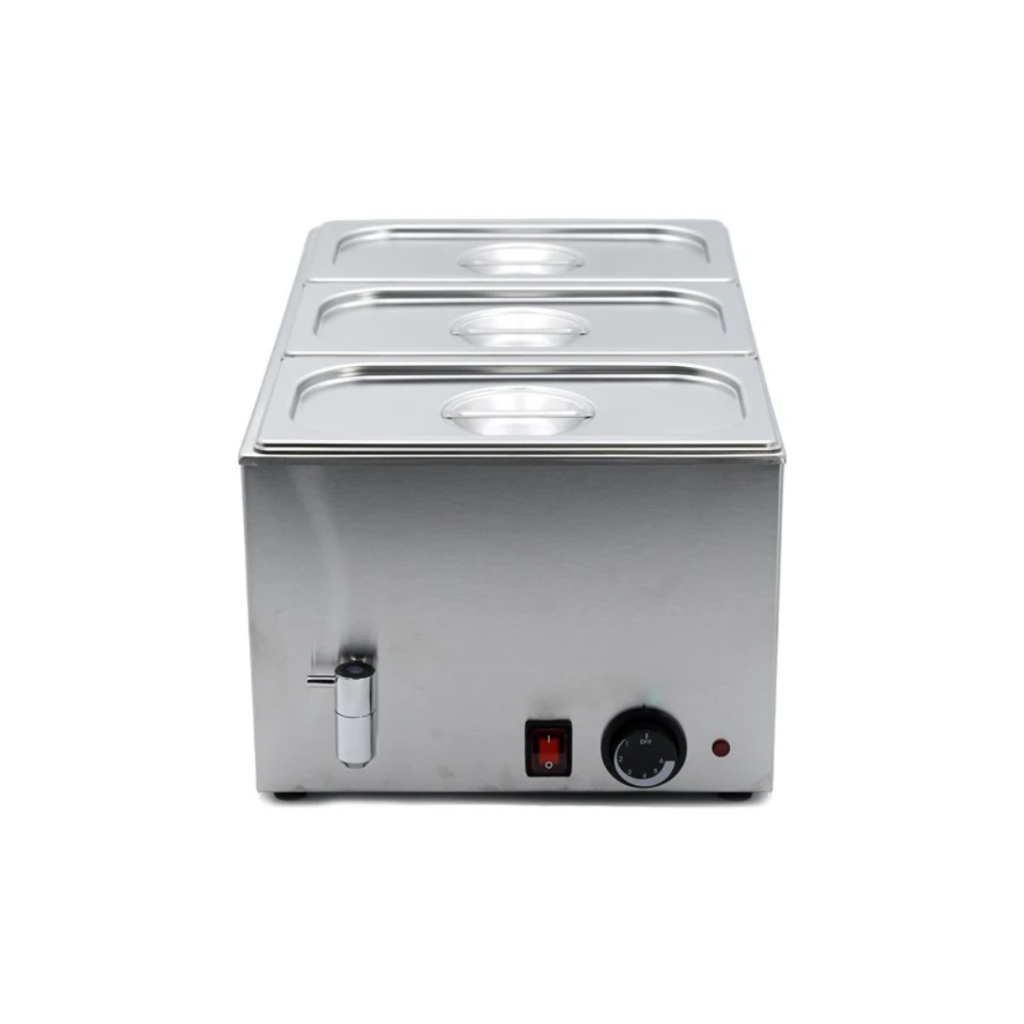
Bain Marie 1/1 GN with Drain Tap (3 x 1/3 Pans Included)
This bain marie is designed for busy commercial kitchens that need efficiency and flexibility in one compact unit. It comes with gastronorm pans included, making it ideal for immediate use in restaurants, cafés, and buffet counters. The integrated drain tap makes cleaning and maintenance significantly easier, which is a major advantage in high-pressure service environments.
Operators often choose this style of bain marie because it supports multiple food types at once—such as sauces, vegetables, curries, and sides—while maintaining consistent heat levels. The GN format also makes it compatible with standard catering layouts, which is essential for professional kitchen organisation.
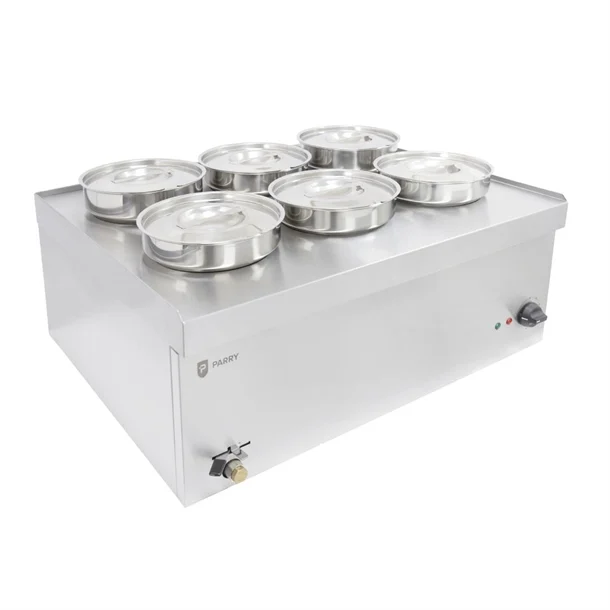
The Parry 6 Pot Bain Marie NPWB6 is built for high-volume buffet and catering environments where multiple dishes must be held at once. Its six-pot configuration allows chefs and catering staff to serve a wide variety of hot foods simultaneously, making it ideal for hotel buffets, carveries, and large event catering.
This type of food warmer is particularly useful when menu variety is important. Instead of rotating pans or constantly reheating food, operators can maintain multiple dishes at safe serving temperatures throughout the service period. That means faster service, better consistency, and reduced food waste.
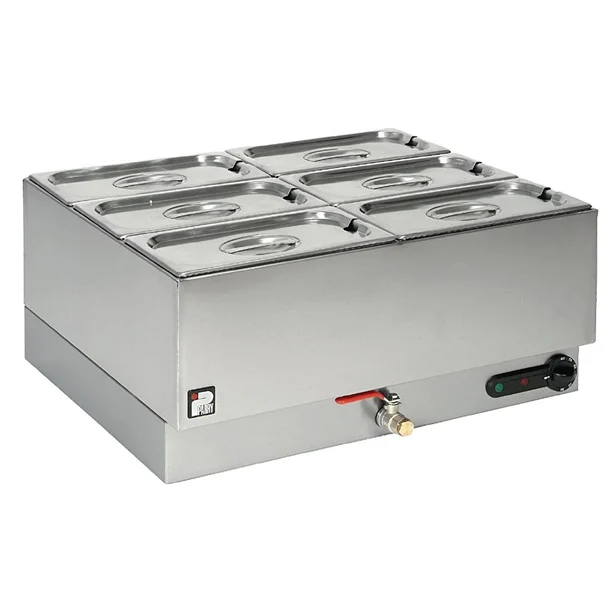
The Parry Electric Wet Well Bain Marie 1985 is designed for professional kitchens that prioritise moisture retention and long holding times. Wet well systems use water to create gentle, even heat distribution, helping prevent food from drying out during extended service periods.
This makes it especially suitable for soups, gravies, curries, and sauces—foods that rely on moisture and texture to maintain quality. In buffet environments, this model helps ensure dishes remain visually appealing and consistent from the first customer to the last.
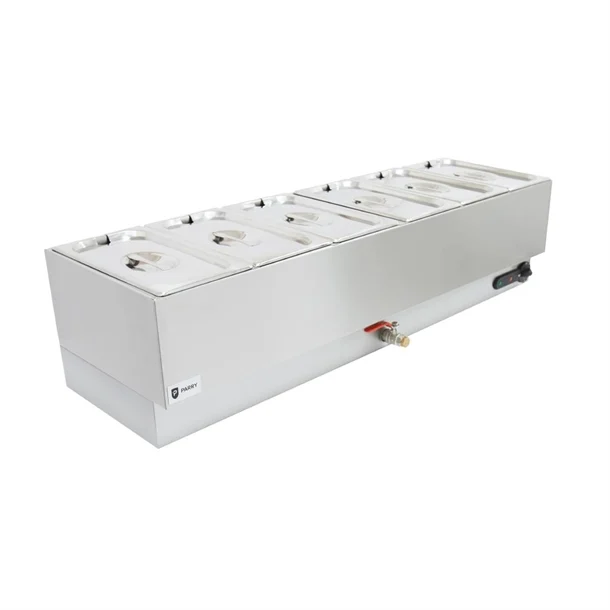
The Parry Electric Wet Well Bain Marie 1987 offers a larger-scale solution for demanding commercial kitchens and buffet operations. Built for durability and continuous use, it supports high-volume food service where maintaining temperature stability is critical.
This model is often used in hotels, large restaurants, and catering venues where multiple trays of food need to be kept warm simultaneously. Its wet well heating system ensures even heat distribution, helping maintain food quality across long service periods.
Food Warmer Equipment for Restaurants and Buffets
Why Food Warmers Matter in Commercial Kitchens
In a fast-paced restaurant environment, timing is everything. Orders come in waves, staff get busy, and service pressure increases quickly. Without proper food warmer equipment, even perfectly cooked dishes can lose quality before they reach the customer.
Food warmers solve this problem by holding food at controlled temperatures until it is ready to be served. This helps maintain taste, texture, and presentation while reducing stress on kitchen staff during peak hours.
More importantly, food safety regulations require hot food to be held at safe temperatures. Reliable warming equipment ensures compliance while supporting smooth kitchen operations.
What Is a Bain Marie?
A bain marie is a commercial food warming system that uses indirect heat to maintain food temperature over time. Instead of applying direct flame or dry heat, it uses water or controlled heating surfaces to gently warm food containers.
This method prevents burning, drying out, or overcooking—common issues in traditional reheating systems. It is especially effective for buffet environments where food must remain presentable for long periods.
How Bain Maries Work
Bain maries work by transferring heat indirectly. Food is placed in gastronorm pans above a heated base. In wet well systems, water acts as the heat conductor, ensuring even temperature distribution. In dry systems, heat is applied directly to the metal surface beneath the pans.
Wet Heat vs Dry Heat Systems
Wet heat bain maries are ideal for moisture-rich foods like soups, sauces, and stews. They help preserve texture and prevent drying out. Dry heat systems, on the other hand, are easier to maintain and heat up faster, making them suitable for drier foods or quick service environments.
Choosing between the two depends on your menu type and service style. Many restaurants even use both systems to handle different food categories efficiently.
Types of Food Warmer Equipment
Countertop Bain Maries
Countertop units are perfect for cafés, takeaways, and small restaurants. They save space while providing reliable food warming for sauces, sides, and pre-prepared dishes.
Buffet Bain Marie Systems
Buffet setups require larger capacity equipment that can hold multiple dishes at once. These systems are essential for hotels, event catering, and self-service dining environments.
Hot Holding Units
Hot holding equipment is designed for prepared food that needs to be kept warm before serving or transport. These units are commonly used in catering operations and commercial kitchens.
Food Warmer Equipment for Buffets
Buffets rely heavily on presentation and consistency. Food must remain visually appealing while staying within safe temperature ranges for extended periods.
Self-Service Buffet Lines
Self-service setups depend on bain maries to maintain food quality while allowing customers to serve themselves easily. This creates a smooth and efficient dining experience.
Hotel Breakfast Stations
Hotel breakfast buffets often require multiple warming units for eggs, bacon, beans, pastries, and hot dishes. These systems must handle constant customer flow during peak morning hours.
Features of Commercial Bain Maries
Stainless Steel Construction
Stainless steel is the industry standard for food warmer equipment because it is durable, hygienic, and easy to clean. It withstands heavy commercial use without degrading.
Temperature Control Systems
Precise temperature control is essential for maintaining food safety and quality. Most commercial bain maries allow operators to adjust heat levels depending on the food being served.
Choosing the Right Food Warmer Equipment
Selecting the right equipment depends on your menu, kitchen size, and service volume. A small café may only need a compact GN unit, while a hotel buffet requires larger multi-pan systems.
Capacity, energy efficiency, and ease of cleaning should all be considered before purchase. Investing in the correct system reduces long-term costs and improves service efficiency.
Benefits of Professional Food Warmers
Professional food warming equipment improves consistency, reduces waste, and enhances customer satisfaction. It also helps kitchen staff manage workload more efficiently during busy periods.
Reliable equipment ensures food is always served at the correct temperature, which directly impacts customer experience and repeat business.
Maintenance and Cleaning
Regular cleaning is essential for hygiene and performance. Stainless steel surfaces should be cleaned daily, while wet systems should be drained and descaled regularly to prevent buildup.
Proper maintenance also extends equipment lifespan and ensures consistent heating performance over time.
Common Mistakes to Avoid
One of the biggest mistakes restaurants make is underestimating their capacity needs. This leads to overcrowding and inconsistent food quality during busy service hours.
Another common issue is neglecting temperature monitoring, which can affect both food safety and customer satisfaction.
Food Warmer Equipment Conclusion
In conclusion Food warmer equipment for restaurants and buffets is essential for maintaining food quality, safety, and efficiency in any commercial kitchen. From compact GN bain maries to large wet well buffet systems, the right equipment ensures food remains hot, fresh, and ready to serve throughout service.
The featured bain marie units above demonstrate how modern catering equipment supports different service styles—from small cafés to large buffet operations. Choosing the right system can significantly improve workflow, reduce waste, and enhance customer satisfaction.
FAQs
What is a bain marie used for?
A bain marie is used to keep cooked food warm at safe serving temperatures using indirect heat.
Are bain maries suitable for buffets?
Yes, they are widely used in buffets because they maintain consistent heat and food quality over long periods.
What foods can be kept in a food warmer?
Soups, sauces, curries, vegetables, rice, and hot buffet dishes are commonly held in food warmers.
What is the difference between wet and dry bain maries?
Wet bain maries use water for gentle heating, while dry systems use direct heat for faster warming and easier maintenance.
How often should bain maries be cleaned?
They should be cleaned daily, with regular deep cleaning and descaling depending on usage.
Food service businesses rely heavily on timing, temperature control, and consistency. Even the best-prepared dish can lose its appeal if it sits too long before serving. That’s where food warmer…
In every professional kitchen, the commercial ovens play a critical role in daily operations. Whether you run a busy restaurant, a takeaway, or a mobile catering business, your cooking equipment…
Why Choosing the Right Commercial Fryer Matters The Importance of a Reliable Commercial Fryer A commercial fryer is one of the most important pieces of equipment in any professional kitchen,…
Introduction Whether you’re setting up a brand-new restaurant or upgrading an existing kitchen, choosing the right commercial catering equipment is crucial to the success of your business. From preparing food…
Running a commercial kitchen is no easy task. From early morning prep to the last plate of the night, your catering equipment takes a beating. When something goes wrong, you…
How To Choose the Right Catering Trailer Equipment Introduction Operating a mobile food business, whether it’s a food truck, catering trailer, or pop-up stand, requires efficient, reliable, and versatile equipment.…
Introduction For any takeaway or fast food outlet serving doner, shish, or chicken kebabs, the kebab machine is one of the most important pieces of equipment in the kitchen. The…
Introduction Firstly, running a commercial kitchen is no easy feat. From the rush of breakfast service to the intensity of dinner prep, every detail counts. One of the most crucial…